
Saint Davis, London
One day in his workshop, two films: a silver ring being made, and the man who makes it.
- Client
- Saint Davis
- Discipline
- Film
- Location
- London
- Scope
- Videography (process film, founder's story)
- Year
- 2026
The brief
Saint Davis opens saintdavis.com in a new tab
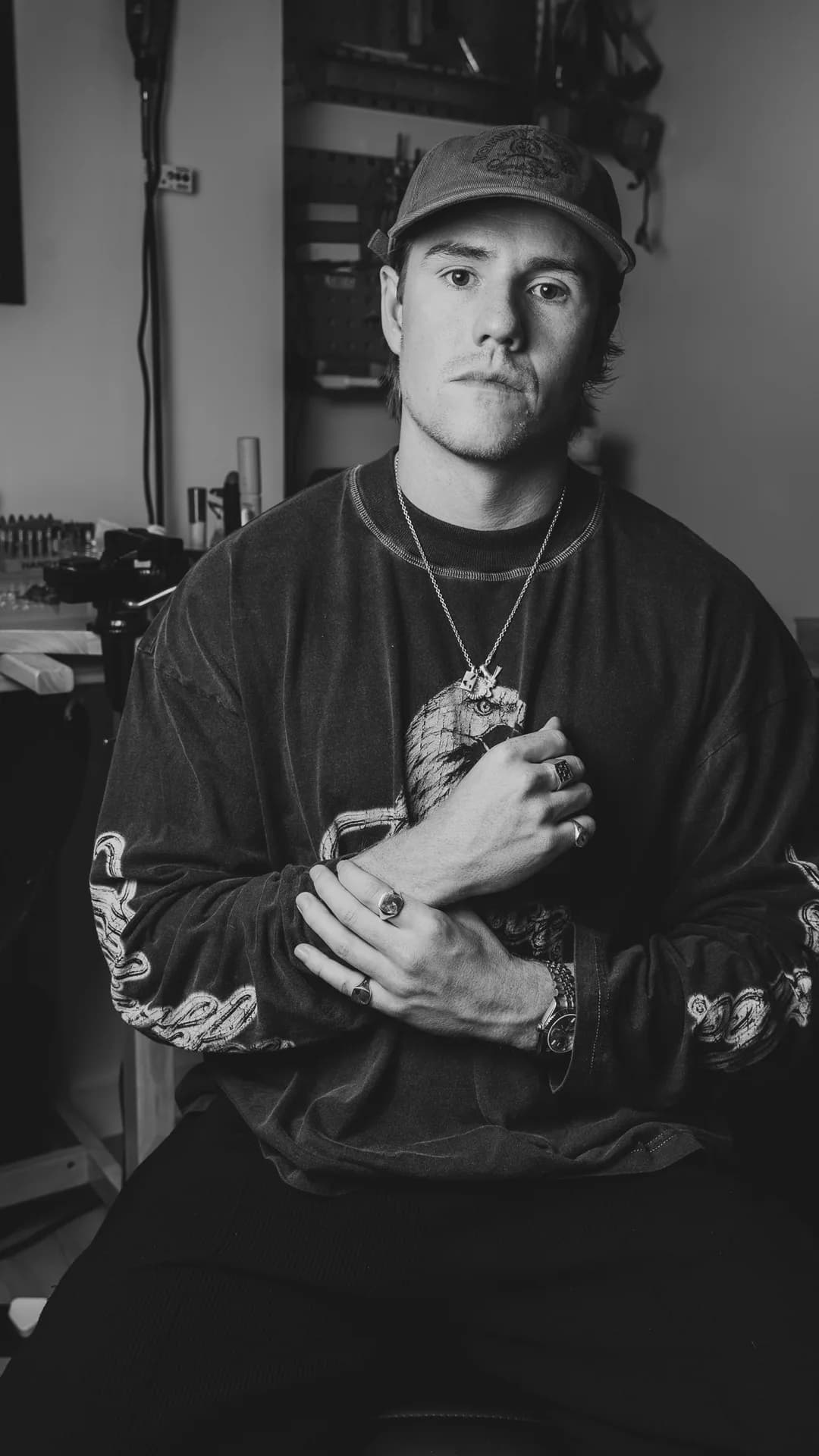
Saint Davis is Dan Saint-Davis's surname, his mother's and his father's joined, and the name on every ring he makes. Fine jewellery, handmade in London. Each piece starts in wax at his bench, is cast in recycled sterling silver or 9ct gold and hallmarked at the Goldsmiths' Company Assay Office, and is made to order, so no two are the same. Dan wanted two things: more people following, and his story told properly.
A jeweller's feed is full of the same two shots, the ring on the hand and the ring on the velvet, and neither shows what you are paying for with a made-to-order ring, which is the hours at the bench. So: one day in his workshop, two jobs. A vertical process film under a minute long, a silver ring taking shape under his hands, built for social. And a founder's story, Dan on camera telling the story from his about page in his own voice, for his website and for the people deciding who they are buying from.
What we made
The hands are the subject.
Process films fail when the filmmaking is more interesting than the making. So the camera stays on the bench, under studio lighting so the metal reads on a phone: a macro lens for the hands and the ring, a wide for the room. Nothing is explained. There is no interview and no voiceover on the process film, because at that distance you can see what is happening. The sound is music and foley, the noises the bench actually makes put back under the picture.
Vertical was the brief, not the crop.
It was shot for nine by sixteen, so the bench fills a phone screen rather than being cut out of a wide shot afterwards. That is the difference between a film that happens to be on social and one made for it. It runs under a minute, which is about as long as a feed gives anyone.
The founder's story gets the order.
Dan on camera, in the workshop, telling it himself: art, graphic design and photography, then most of his twenties in finance; a ring to mark his 30th birthday, which his mum, an artist, told him to make rather than buy; the kit she found; the first piece; family asking, then friends, then people he barely knew. The brand is his surname, so the person is most of the reason to trust the product, and Dan telling it does what a page of brand copy cannot. The process film earns the watch. This film gets the order.
Shot in London, cut in Leeds.
Neon Frame Creative is a creative media studio in Leeds with a second studio in Camden. Videography is one of six disciplines, and it travels: our creative director shot both films in one day in Dan's London workshop, and the edit was done at the Leeds studio. Both films were planned together before the shoot, which is why one day produced two. If you make something and want it filmed in the room where it happens, send the brief and you get a scope and a number.
Detail
Delivered
- Process film, 9:16, 55 seconds, for Instagram, TikTok and YouTube Shorts
- Founder's story, for saintdavis.com and social
Outcome
The process film runs on Saint Davis's Instagram and TikTok and on ours. The founder's story lives on saintdavis.com and on social.
Credits
- Crew
- Shot by our creative director in one day, edited at the Leeds studio
Saint Davis: straight answers
Asked and answered
- Do you film outside Leeds?
- Yes. The studio is in Leeds and London and this shoot was a day in Dan's London workshop. Travel goes on the quote as a line.
- What does a short process film cost?
- Shoot days, locations and the number of cuts move the number. Finished length barely does. A single-location day that produces a vertical process film and a founder's story, as this one did, sits at the bottom of the range. Send the brief and you get a number.
- Can a process film and a founder's story come from one shoot?
- Yes, and they should. Same room, same light, same day, and the person who made the thing is already there. Agreeing both before the camera comes out is what makes the second film cheap.